News articles
-

A drop of blood can detect Alzheimer’s – international award
The 2026 Jeffrey L. Morby Prize has been awarded to researchers from Lund University and Washington University for a... Read more... -

New blood biomarker reduces the risk of misdiagnosing Alzheimer’s disease.
The new blood tests for diagnosing Alzheimer’s disease are providing increasingly better opportunities for early diagnosis, but one challenge... Read more... -
Blood Tests: Not Just for the Impaired?
In memory clinics and in research cohorts, immunoassays for plasma markers can now distinguish people who have Alzheimer’s disease... Read more... -
Looking Good: Immunoassays for Blood Markers
For years, scientists have been working toward blood tests for Alzheimer’s disease that could be used routinely in clinical... Read more... -

More opportunities to test for Alzheimer’s using new analytical method
A simpler method of analysing blood samples for Alzheimer’s disease has been tested in a large multicentre study, led... Read more... -

Simple, yet effective way to early detect Alzheimer’s disease
A simpler method of analysing blood samples for Alzheimer’s disease has been tested in a large multicentre study, led... Read more...
Recent key publications
Plasma eMTBR-tau243 and %p-tau217 for Biological Staging of Alzheimer Disease
Trajectories of plasma and CSF MTBR-tau243 and phosphorylated-tau species across the Alzheimer’s disease continuum.
A deep joint-learning proteomics model for diagnosis of six conditions associated with dementia
Integration of plasma eMTBR-tau243 and p-tau217 in the diagnosis and stratification of Alzheimer’s disease: a prospective cohort study
Identification of distinct and shared biomarker panels in different manifestations of cerebral small-vessel disease through proteomic profiling
Reference proteins to improve Core 1 and Core 2 Alzheimer’s disease CSF and plasma biomarkers
Alzheimer’s disease outlook: controversies and future directions
Primary care detection of Alzheimer’s disease using a self-administered digital cognitive test and blood biomarkers
Plasma Phosphorylated Tau 217 to Identify Preclinical Alzheimer Disease
Two-step detection of Lewy body pathology via smell-function testing and CSF α-synuclein seed amplification
Alzheimer’s Association Clinical Practice Guideline on the use of blood-based biomarkers in the diagnostic workup of suspected Alzheimer’s disease within specialized care settings
Evaluation of the Revised Criteria for Biological and Clinical Staging of Alzheimer Disease
Plasma phospho-tau217 for Alzheimer’s disease diagnosis in primary and secondary care using a fully automated platform
Plasma MTBR-tau243 biomarker identifies tau tangle pathology in Alzheimer’s disease
Plasma p-tau217 and tau-PET predict future cognitive decline among cognitively unimpaired individuals: implications for clinical trials
Machine learning prediction of tau‐PET in Alzheimer’s disease using plasma, MRI, and clinical data
Alpha-synuclein seed amplification assay longitudinal outcomes in Lewy body disease spectrum.
Altered Empathy Processing in Frontotemporal Dementia.
Diagnosis of Alzheimer’s disease using plasma biomarkers adjusted to clinical probability.
A comprehensive head-to-head comparison of key plasma phosphorylated tau 217 biomarker tests.
Lewy body pathology exacerbates brain hypometabolism and cognitive decline in Alzheimer’s disease.
Blood Biomarkers to Detect Alzheimer Disease in Primary Care and Secondary Care
Plasma Phosphorylated Tau 217 and Aβ42/40 to Predict Early Brain Aβ Accumulation in People Without Cognitive Impairment
MRI Signature of α-Synuclein Pathology in Asymptomatic Stages and a Memory Clinic Population
Revised criteria for the diagnosis and staging of Alzheimer’s disease
Disease progression modelling reveals heterogeneity in trajectories of Lewy-type α-synuclein pathology
Tau Positron Emission Tomography for Predicting Dementia in Individuals With Mild Cognitive Impairment
Disease staging of Alzheimer’s disease using a CSF-based biomarker model
A blood-based biomarker workflow for optimal tau-PET referral in memory clinic settings
Highly Accurate Blood Test for Alzheimer’s Disease Comparable or Superior to Clinical CSF Tests.
Plasma Biomarker Strategy for Selecting Patients With Alzheimer Disease for Antiamyloid Immunotherapies.
The α-synuclein PET tracer [18F] ACI-12589 distinguishes multiple system atrophy from other neurodegenerative diseases.
DOPA decarboxylase is an emerging biomarker for Parkinsonian disorders including preclinical Lewy body disease.
Cognitive effects of Lewy body pathology in clinically unimpaired individuals.
Clinical effects of Lewy body pathology in cognitively impaired individuals.
CSF MTBR-tau243 is a specific biomarker of tau tangle pathology in Alzheimer’s disease.
X posts
📢 New preprint from BioFINDER, led by @karlssonlinda1!
We trained a deep learning model to generate synthetic tau-PET 3D scans from more accessible data: structural MRI, plasma p-tau217, and age. https://www.medrxiv.org/content/10.64898/2026.05.06.26352540v1

4️⃣ Want to try it out yourself? The trained model and project code is openly available on GitHub for research use (License: CC BY-NC)! 🐙

GitHub - DeMONLab-BioFINDER/karlsson_synthetic_taupet: Generate synthetic tau-PET 3D scans from...
Generate synthetic tau-PET 3D scans from MRI, age and plasma p-tau217. - DeMONLab-BioFINDER/karlsson_synthetic_taupet
github.com
5️⃣ Big thanks to all co-authors: @karlssonlinda1, @ErikRubenSmith, @EStomrud, @SebastianPalmqv, @sylv_villeneuve, @RenaudLaJoie, @NiklasMattsson4, @_JakeVogel_, and all not on X.

Generating synthetic tau-PET scans in Alzheimer’s disease from MRI, blood biomarkers and demograp...
Tau protein aggregation in the brain is a hallmark of Alzheimer’s disease (AD). Positron emission tomography (PET) ...
www.medrxiv.org
New paper in @GreenJournal! We investigated whether future AD dementia can be predicted in individuals with subjective cognitive decline. We found that plasma p-tau217, cognitive testing, and APOE ε4 status accurately identify those at highest risk. https://www.neurology.org/doi/pdf/10.1212/WNL.0000000000214983
This study was led by María Rivera Sánchez. A huge thanks to all co-authors: @SEMastenbroek, @NiklasMattsson4, @DaniellevWe, @EStomrud, @SebastianPalmqv, @RikOssenkoppele
New publication in JAMA Neurology! 🧠
In this study, led by @gesalbla, we developed and validated a plasma-based biological staging model for Alzheimer’s disease using two blood biomarkers: %p-tau217 and eMTBR-tau243.

Plasma eMTBR-tau243 and %p-tau217 for Biological Staging of Alzheimer Disease
This longitudinal study develops and validates a blood plasma–based biological staging model for Alzheimer disease tha...
jamanetwork.com
This supports the potential of blood-based biological staging as scalable alternative to PET imaging for AD characterization. This approach may improve participant stratification for clinical trials and facilitate broader implementation of biological staging in clinical practice.
A huge thank you to all co-authors and collaborators for their incredible work on this project: @KantaHorie, @SuzanneESchind1, @A_OrdunaDolado, @tlsmit1, @BrianGordon81, @NiklasMattsson4, @SebastianPalmqv, @_JakeVogel_ @RandallBateman3, @RikOssenkoppele, and all not on X.
New paper in Nature Aging led by PhD student @LuLina000147323! We mapped how APOE ε4 and APOE ε2 shape molecular changes in blood and cerebrospinal fluid across Alzheimer’s disease.

Proteomic signatures of the APOE ε4 and APOE ε2 genetic variants and Alzheimer’s disease
Nature Aging - Apolipoprotein E (APOE) is the strongest genetic influence in Alzheimer’s disease (AD). Compared to ...
www.nature.com
Using large-scale proteomics across multiple cohorts, we found that APOE ε4 and APOE ε2 have largely distinct protein signatures. Many changes appeared even before detectable Aβ pathology, suggesting that APOE-related molecular alterations may begin long before dementia develops.
A big thanks to all authors and collaborators!
@LuLina000147323, @ines_hristovska, @cumplido_irene, @anlijuncn, @RikOssenkoppele, @SebastianPalmqv, @_JakeVogel_, @EStomrud, @NiklasMattsson4
New paper in Nature Communications! We mapped trajectories of multiple tau species in plasma & CSF across the AD continuum. Different tau species change at distinct stages: %p-tau217 earliest, MTBR-tau243 later, highlighting stage-specific biology.
🔗

Trajectories of plasma and CSF MTBR-tau243 and phosphorylated-tau species across the Alzheimer’s...
Nature Communications - Plasma and CSF p-tau biomarkers show similar dynamics across Alzheimer’s disease progression, ...
www.nature.com
Big thanks to all authors and collaborators! @LECollij @gesalbla @KantaHorie @tobeybetthauser @ErikRubenSmith @SebastianPalmqv @SuzanneESchind1 @RikOssenkoppele @NiklasMattsson4 @RandallBateman3
New publication alert!
Are patients seen in primary care eligible for amyloid-targeting therapies (ATT) for treatment of Alzheimer’s disease? 🧠We evaluated ATT eligibility among patients with cognitive symptoms in primary care in southern Sweden.
Eligibility for amyloid targeting therapies among primary care patients with cognitive symptoms
Alzheimer's Research & Therapy - Alzheimer’s disease (AD) is the most common cause of dementia and a growing hea...
link.springer.com
This study was led by Beata Borgström Bolmsjö. A big thanks to all collaborators and co-authors: @DaniellevWe @SuzanneESchind1 @LECollij @ErikRubenSmith @NiklasMattsson4 @EStomrud @SebastianPalmqv and all not on X.
New publication out in Brain! 📢We developed a data-driven multimodal biomarker framework to characterize a memory clinic cohort based on the presence, extent, and sequence of common pathologies. This framework may support diagnosis and trial selection.
🔗
Biological classification of memory clinic patients
Mastenbroek et al. present a biological framework developed to categorize individuals in a memory clinic cohort based ...
academic.oup.com
The study was led by @SEMastenbroek, a huge thank you to all co-authors: @LECollij, @teanijarv, @jorittmo, @YoungAlexL, @ErikRubenSmith, @NicolaSpotorno, @SebastianPalmqv, @NiklasMattsson4, @_JakeVogel_, @FBarkhof, @RikOssenkoppele and all not on X.
New publication out in Brain! 📢
We found that reference proteins Aβ40 and np-tau consistently helped already high-performing fluid biomarkers (e.g., MTBR-tau243 and p-tau variants) to more reliably represent brain Aβ and tau pathology measured by PET.
🔗

Reference proteins to improve Core 1 and Core 2 Alzheimer’s disease CSF and plasma biomarkers
Karlsson et al. show that normalizing Alzheimer’s disease cerebrospinal fluid and plasma biomarkers to reference prote...
academic.oup.com
The study was led by @karlssonlinda1, a huge thank you to @KantaHorie @JosephTherr @SuzanneESchind1 @_JakeVogel_ @astromkalle @BrianGordon81 @cyrusraji @tlsmit1 @SebastianPalmqv @EStomrud @gesalbla @pedrorosaneto @RandallBateman3 @NiklasMattsson4 🔗
Reference proteins to improve Core 1 and Core 2 Alzheimer’s disease CSF and plasma biomarkers
Karlsson et al. show that normalizing Alzheimer’s disease cerebrospinal fluid and plasma biomarkers to reference prote...
academic.oup.com
📢New in The Lancet Neurology!
We validate a two-step blood test for Alzheimer’s disease:
1️⃣ plasma %p-tau217 identifies amyloid-β pathology
2️⃣ plasma eMTBR-tau243 assesses whether AD pathology is causing clinical symptoms
🔗https://www.sciencedirect.com/science/article/pii/S1474442226000293
This study was led by @NiklasMattsson4, huge thanks to all co-authors: @SebastianPalmqv, @KantaHorie, @gesalbla, @tlsmit1, @LECollij, @RikOssenkoppele, @SuzanneESchind1, @EStomrud, @RandallBateman3, and all not on X.
New BioFINDER preprint!
We formalise the Aβ–tau–neurodegeneration (ATN) framework into a mechanism-based model of AD, enabling us to simulate longitudinal imaging biomarkers and study how disease processes evolve and interact across the AD continuum.
🔗https://www.biorxiv.org/content/10.64898/2026.01.27.701320v1

This work was led by @ChaggarPavan, @_JakeVogel_, Niklas Mattsson-Carlgren, Oskar Hansson, @AlainGoriely. Huge thanks to all coauthors: Travis Thompson, Roxana Aldea, Olof Strandberg, Erik Stomrud, Sebastian Palmqvist, @RikOssenkoppele, @SaadJbabdi, Stefano Magon, Gregory Klein!
We’d love to hear your thoughts and feedback!
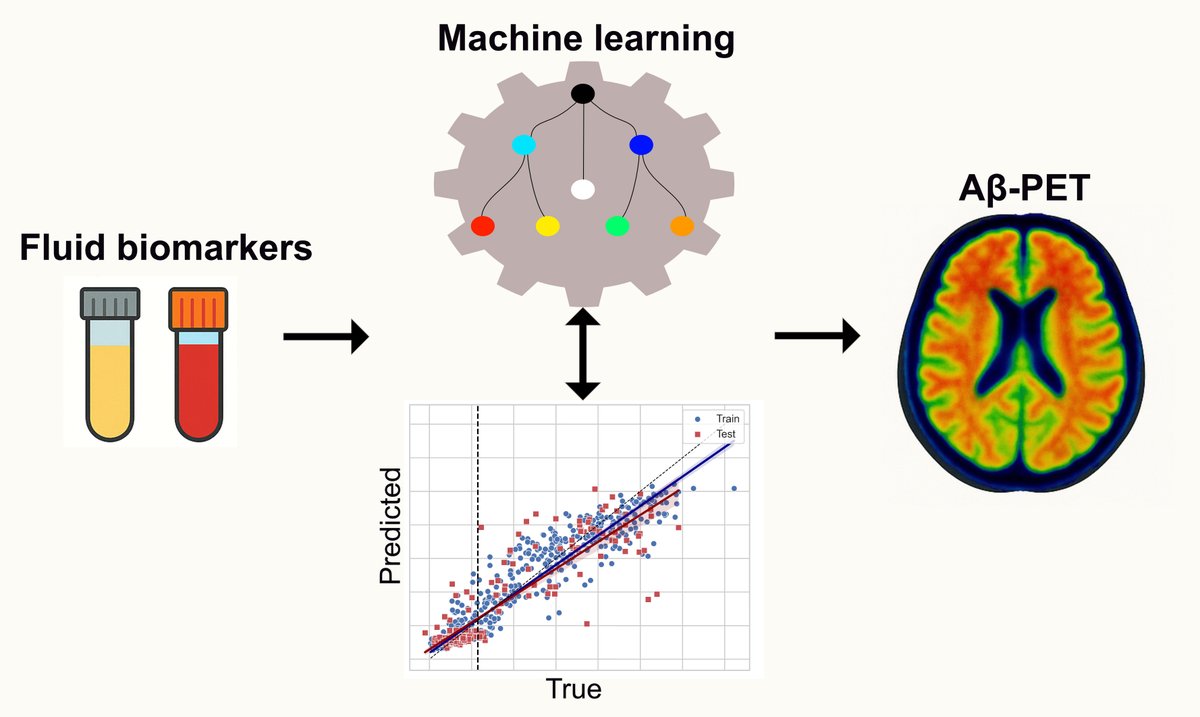
New paper out in EMBO Mol Med! We use machine learning to predict Aβ-PET burden from fluid biomarkers
Findings:
-Performance R² = 0.79
-CSF Aβ42/Aβ40 most predictive of Aβ plaque presence
-Plasma p-tau217 best for tracking increasing amyloid plaque burden

Prediction of continuous amyloid positron emission tomography with fluid measures of phosphorylated...
EMBO Molecular Medicine - Brain amyloid-β (Aβ) pathology is a core feature of Alzheimer disease (AD) and can be ...
www.embopress.org
Main takeaway:
CSF Ab42/Ab40 and plasma p-tau217 showed distinct contributions when predicting Aβ-PET, improving our understanding of disease progression and guiding how biomarkers can be applied in clinical and research settings.
The study was led by @NiklasMattsson4, @karlssonlinda1, and Weizhong Tang. Thank you to all co-authors: Kaj Blennow, Henrik Zetterberg, @RandallBateman3, @SuzanneESchind1, Nicolas Barthelemy, @SebastianPalmqv, @EStomrud, Shorena Janelidze, and @OskarHansson9.
🚨Paper Out in @EANeurology!
Systematic Review & Meta-analysis of ALS Fluid Biomarkers
🧵Key findings:
• NfL leads for both diagnosis (AUC 0.81–0.92) & prognosis (HR 2.8–4.3)
• CSF chitinases, p-tau/t-tau: moderate values
• Marked heterogeneity
🔗

Diagnostic and Prognostic Value of Blood and Cerebrospinal Fluid Biomarkers in Amyotrophic Lateral...
Background Reliable biomarkers for amyotrophic lateral sclerosis (ALS) are urgently needed due to diagnostic and prognos...
doi.org
💡 Takeaway:
• NfL is robust but not sufficient alone in low-prevalence settings.
• Diagnostic and prognostic frameworks should move toward standardized multimodal models integrating fluid #biomarkers with established predictors.
#ALS #MND

A huge thanks to all authors! @NiklasMattsson4
🚨New publication in Alzheimer's & Dementia! In this perspective paper, we discuss whether Aβ blood biomarkers can replace the accepted reference standard, Aβ-PET, for assessing Aβ burden.🔗Full paper:

Complementary utility of plasma biomarkers and Aβ‐PET for diagnosis, risk‐stratification, and...
With the rapid development of blood biomarkers (BBMs) related to amyloid-β (Aβ) pathology in Alzheimer's disease (AD...
alz-journals.onlinelibrary.wiley.com
A huge thanks to all authors: @LECollij, @NiklasMattsson4, Shorena Janelidze, @RikOssenkoppele, and @OskarHansson9
🚨New publication in Brain Communications!
In this study, we show that microglial cells play a key role in Alzheimer's disease, particularly in regulating changes in soluble tau, based on cell-type-specific genetic evidence.
🔗Full paper:

Cell-weighted polygenic risk scores are associated with β-amyloid and tau biomarkers in Alzheimer’s...
Kumar et al. report distinct cellular effects on measures of β-amyloid and tau. Importantly, they also found cell-l...
academic.oup.com
The study was led by Atul Kumar. Thank you to all co-authors: @DivyaBali06, @EStomrud, @SebastianPalmqv, @_JakeVogel_, @OskarHansson9, @NiklasMattsson4, and those not on X.
5⃣ In conclusion, our results support the clinical utility of plasma p-tau217 as stand-alone tool for identifying preclinical AD but adding confirmatory CSF/PET would further improve PPVs as needed in many clinical applications.
🎯The use of plasma p-tau217 will reduce resource demands and burdensome procedures accelerating the development and implementation of early AD therapeutics.
🚨Paper alert🚨
New publication in @JAMANeuro led by @gesalbla. In a multicentric study, we examined the clinical utility to assess preclinical #Alzheimer's disease in cognitively unimpaired individuals.
A 🧵...
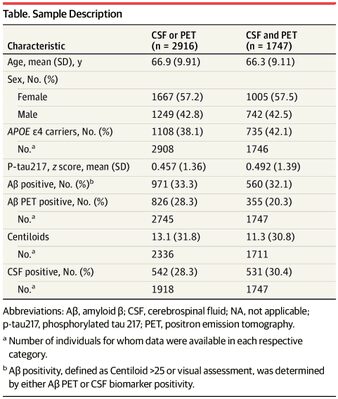
Plasma P-Tau217 to Identify Preclinical AD
This cohort study evaluates the use of plasma phosphorylated tau 217 in identifying preclinical Alzheimer disease in ...
jamanetwork.com
🙏Many thanks to all collaborators in this large study including 12 international cohorts: @DivyaBali06 @A_OrdunaDolado @JosephTherr @EStomrud @NiklasMattsson4 @EmmaCoomans @CharlotteTeuni1 @NesrineR95 @JuandoGispert @vincentDore2 @AzadehFeizpour
@DAlcoleaR @sylv_villeneuve @pedrorosaneto @SuzanneESchind1 @RikOssenkoppele @OskarHansson9 with data from @amsterdamumc @BarcelonaBeta @MayoClinicNeuro @mcgillu @prevent_ad @WashUMedADRC @WisconsinADRC… and those not in X.